Palmgrade
A school-management platform that keeps exams, grades and parent results running, even when the internet doesn’t.
- Role
- Lead product designer
- Platform
- Web app · installable PWA
- Scope
- 8 modules, design system
- Team
- Design: Joy · Engineering: Benjamin Nneji
The brief
Run a whole school on a connection you can’t trust.
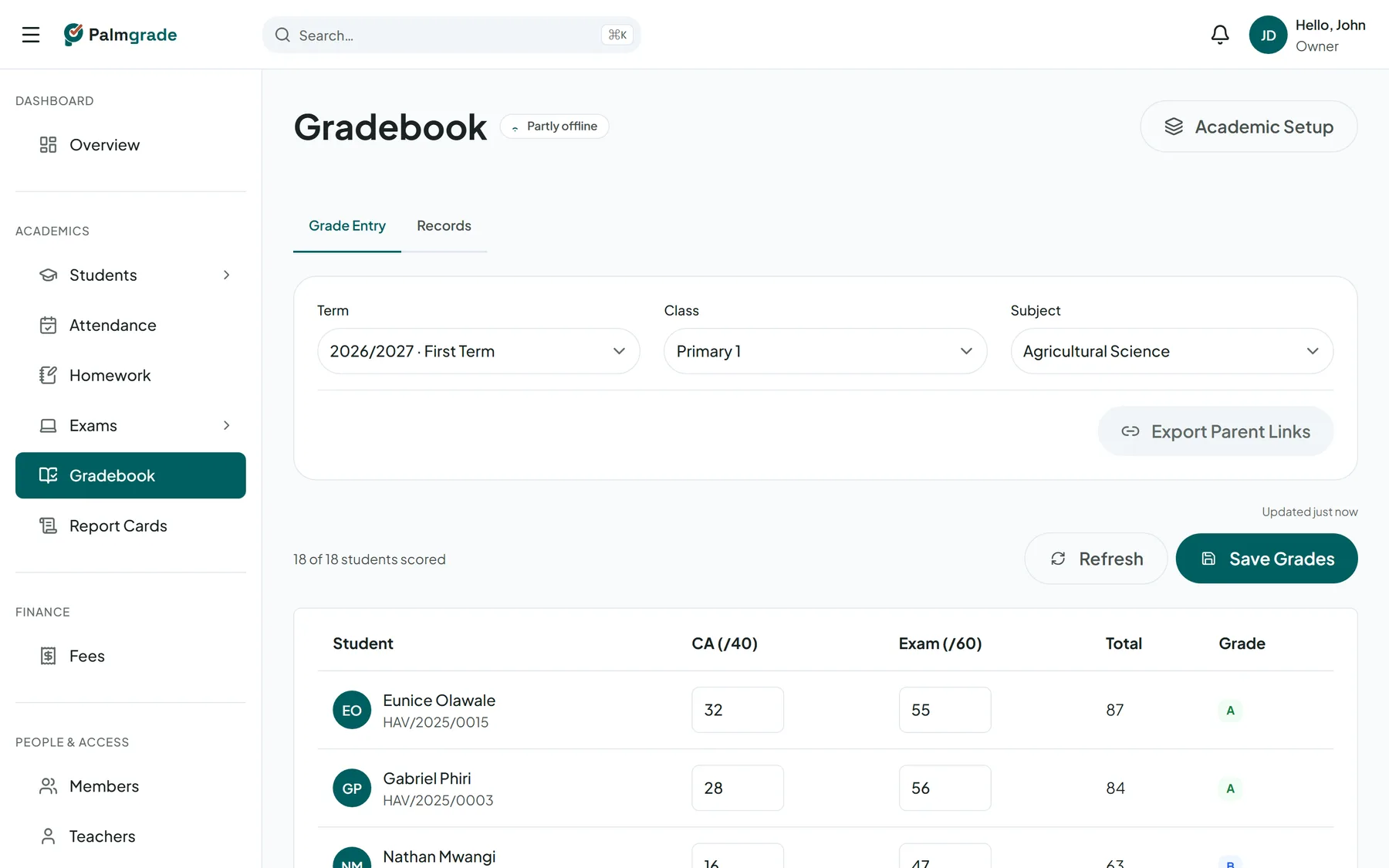
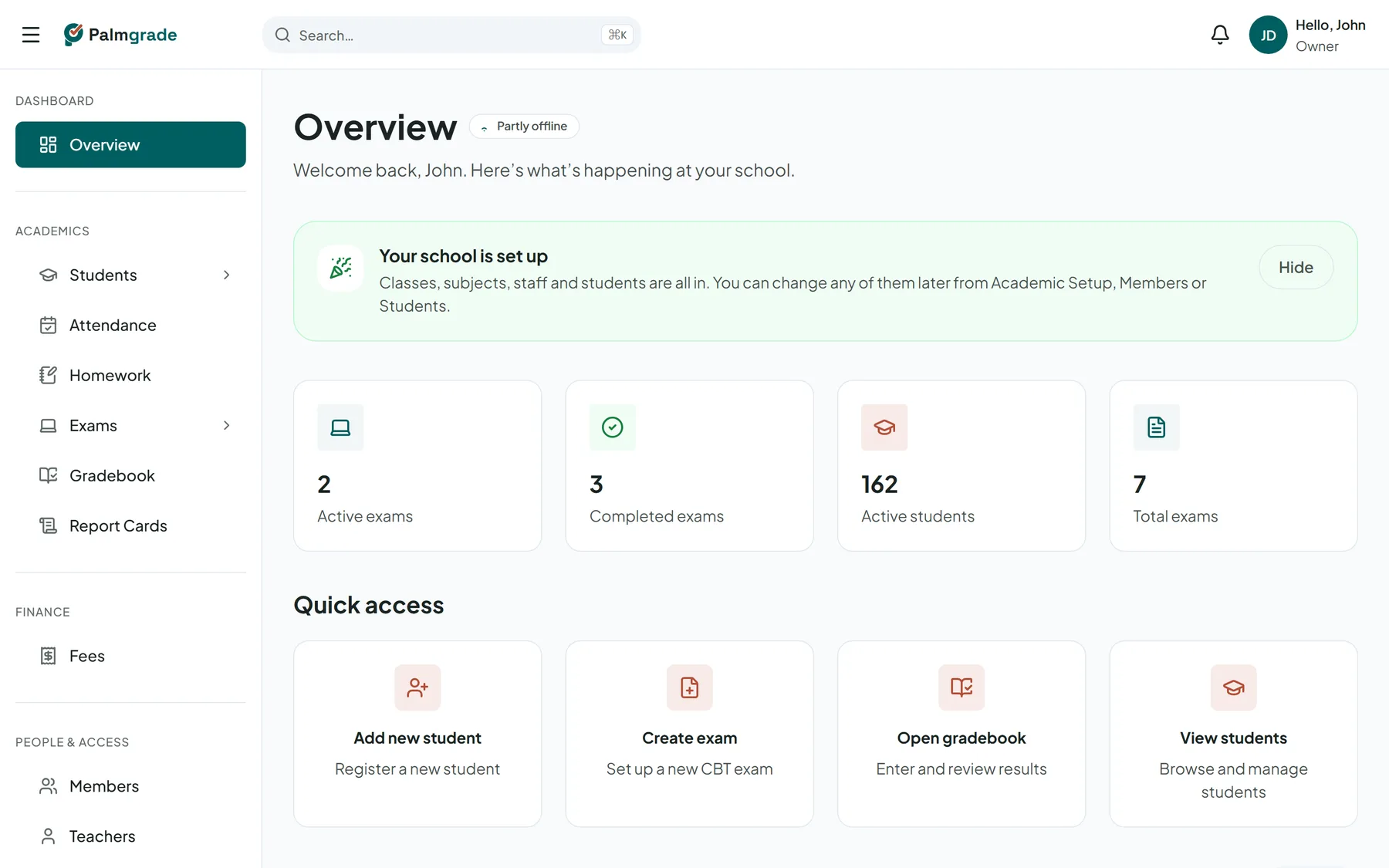
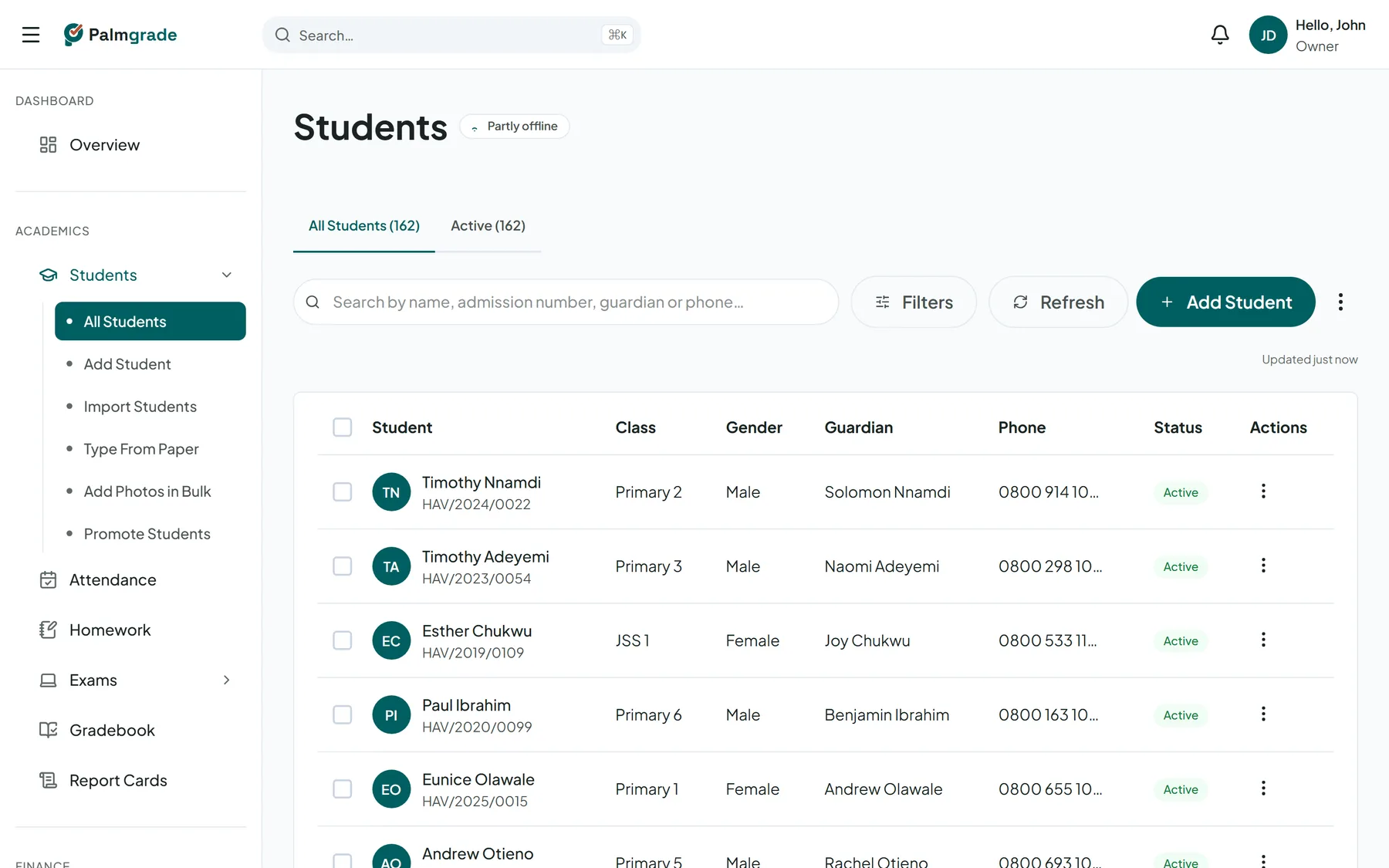
Palmgrade is a school-management platform built for schools across Africa: student records, attendance, homework, computer-based exams, the gradebook, report cards, fees and a parent results portal, all in one product.
The hard part was never the feature list. It was designing every one of those features to keep working when the internet drops, the power cuts, and exam day still has to happen.
Constraints
Four things the design had to make peace with
Unstable internet
An exam scheduled for 9am can’t depend on a connection that may drop mid-paper. The product had to keep an exam alive through a dead connection, not just show an error.
Unreliable power
Devices and routers go down without warning. Every screen saves progress constantly and never assumes a session will finish in one sitting.
Mixed devices
Admins on desktop, teachers on shared tablets, students on whatever phone is free that day, parents who may never own a smartphone. One UI had to flex across all of it.
Trust in results
Digital exams only work if results can’t be disputed. Integrity controls had to feel like the exam protecting the student’s grade, not surveillance.
Audiences
Designing for four people at once
Each role gets a product that looks like it was made only for them, on top of one shared permission model.
The administrator
Runs the school, not the software. Setup mirrors how schools actually operate: classes, arms, subjects and fee structures that vary school to school.
- Bulk import students and staff
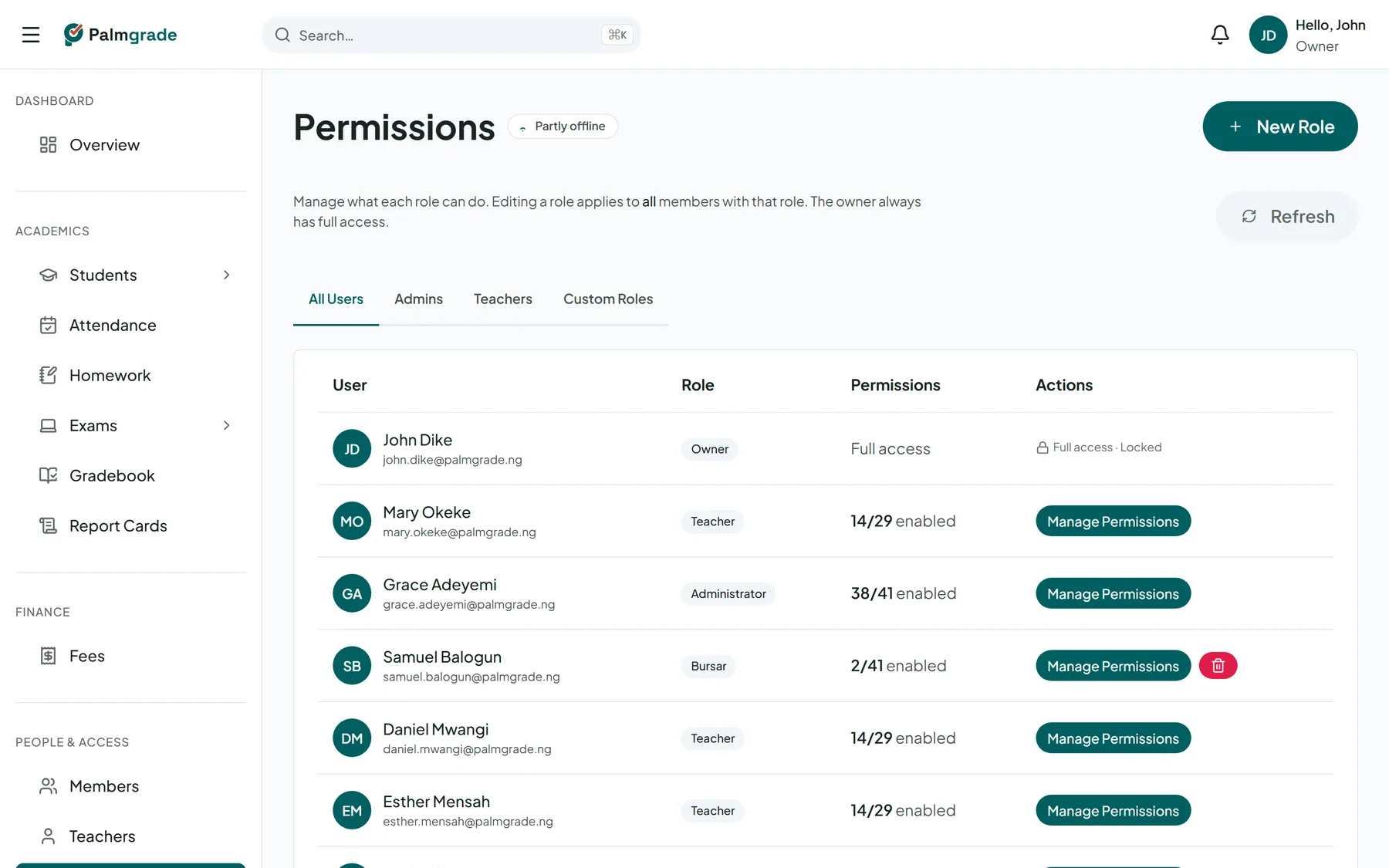
- Custom roles, e.g. a Bursar who can collect but not set fees
- Full visibility across every other role
The teacher
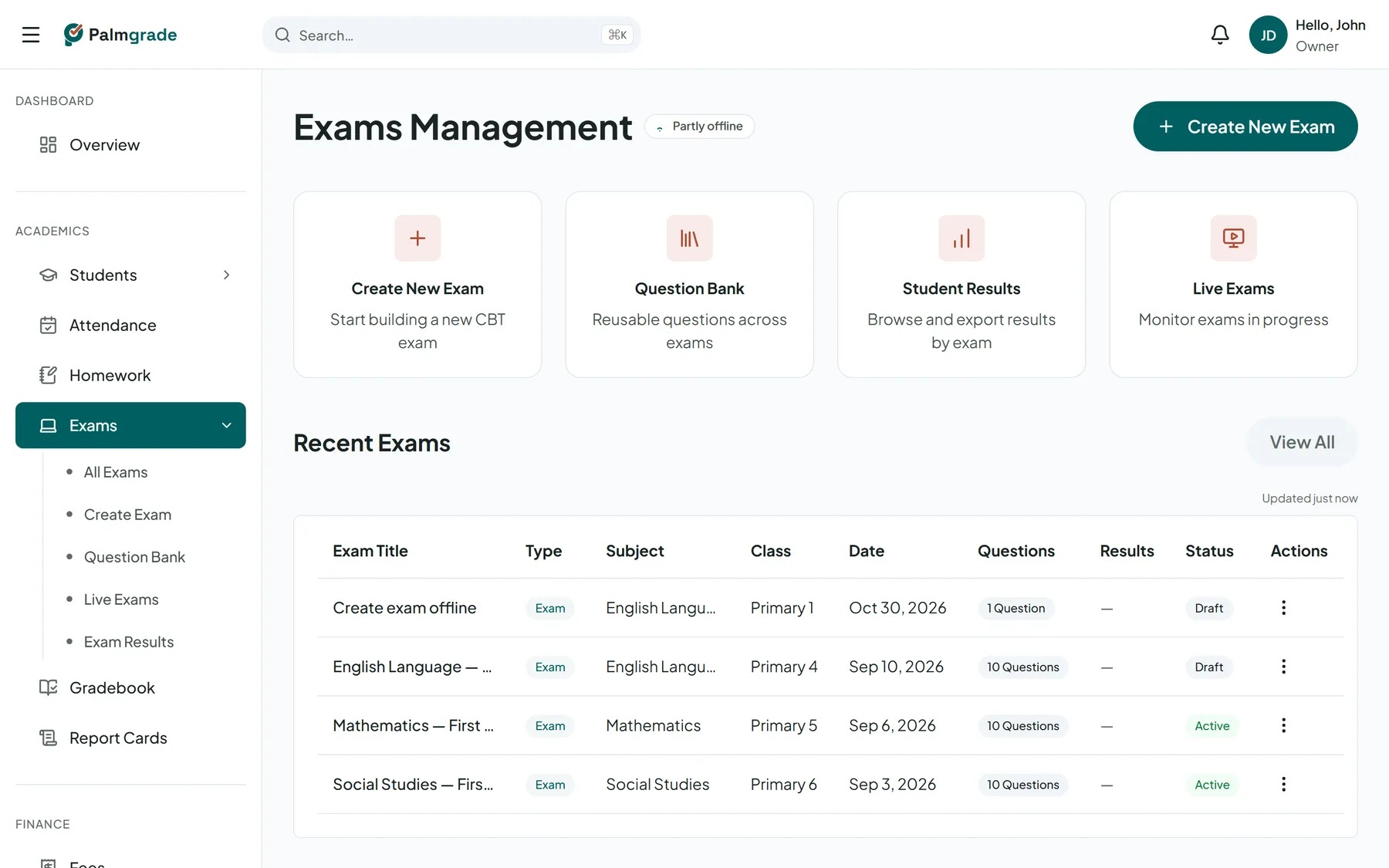
Needs exams that grade themselves. Building and scheduling a CBT exam takes minutes, not a training session.
- Build and schedule exams in minutes
- Instant auto-grading on submission
- Integrity controls on by default
The student
Needs an exam, not an extra hurdle. A one-time code and a countdown are the only two things to think about.
- Enter with a one-time exam code
- Clear, enforced countdown
- Survives a dropped connection
The parent
Just wants to know how their child is doing, often on a phone with patchy data. Results load fast and read plainly.
- A results link that needs no account
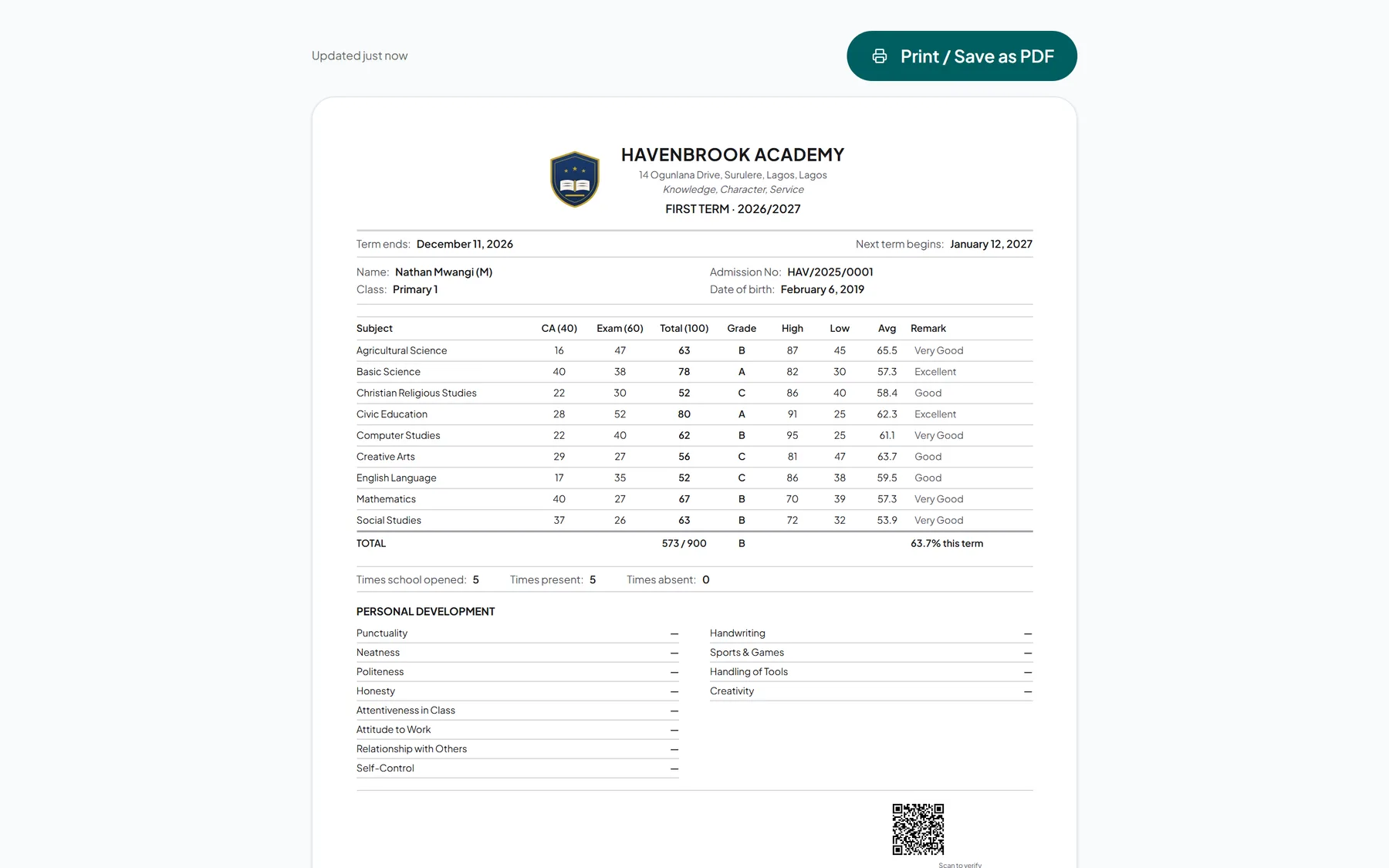
- Report cards that print cleanly
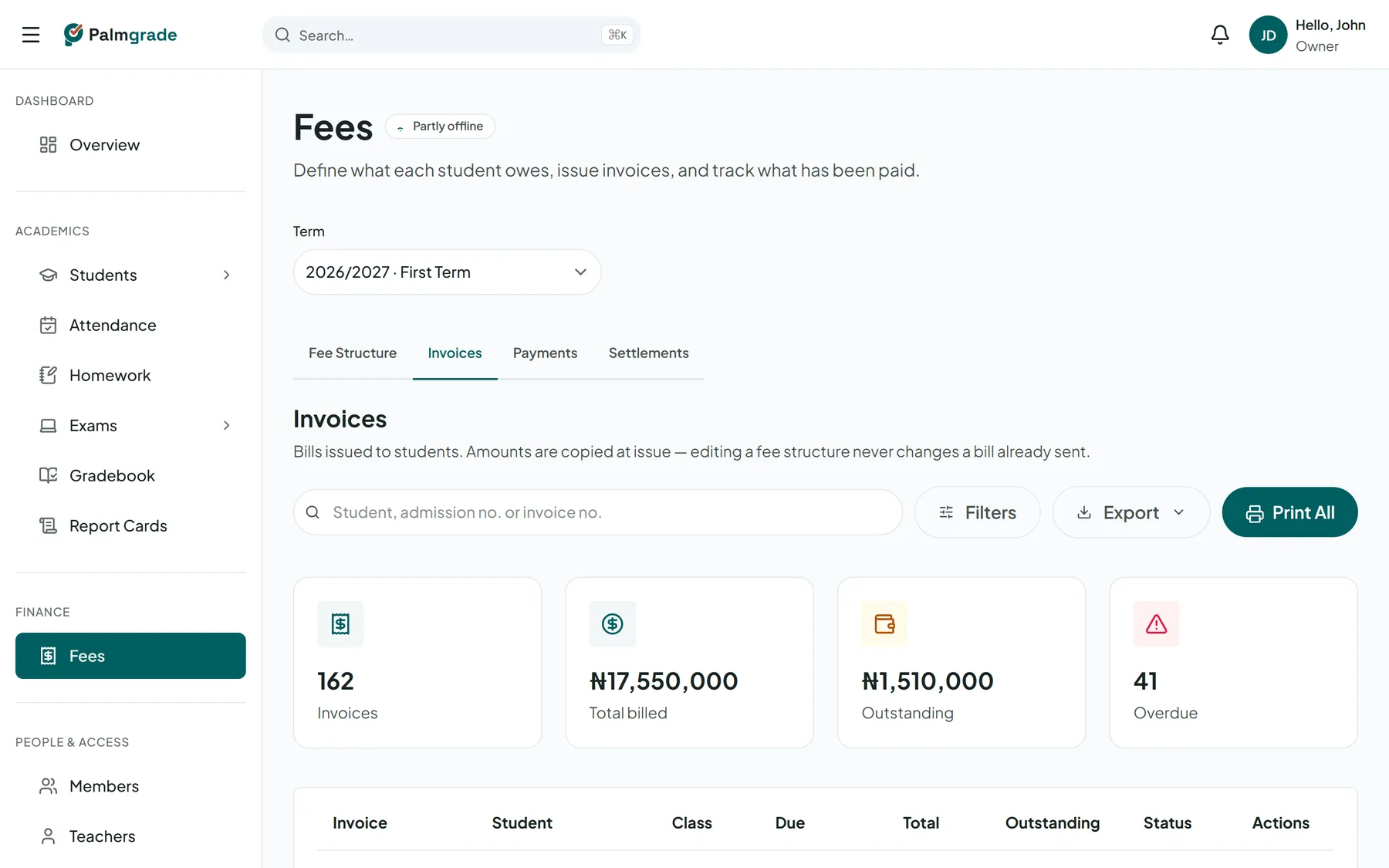
- Fees and payments in one place
Decisions
What I’d point an interviewer to
- Offline is a state, not an error
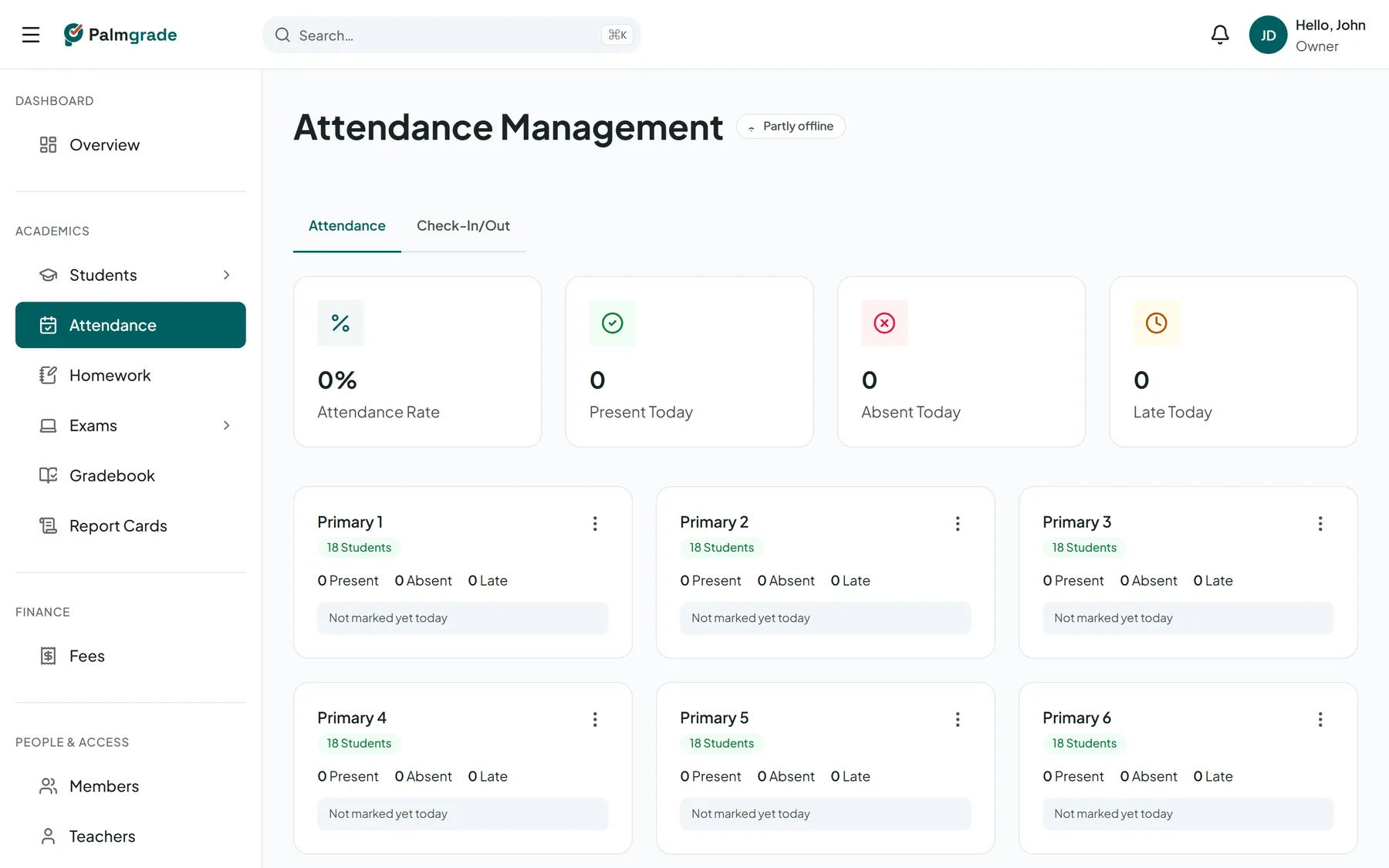
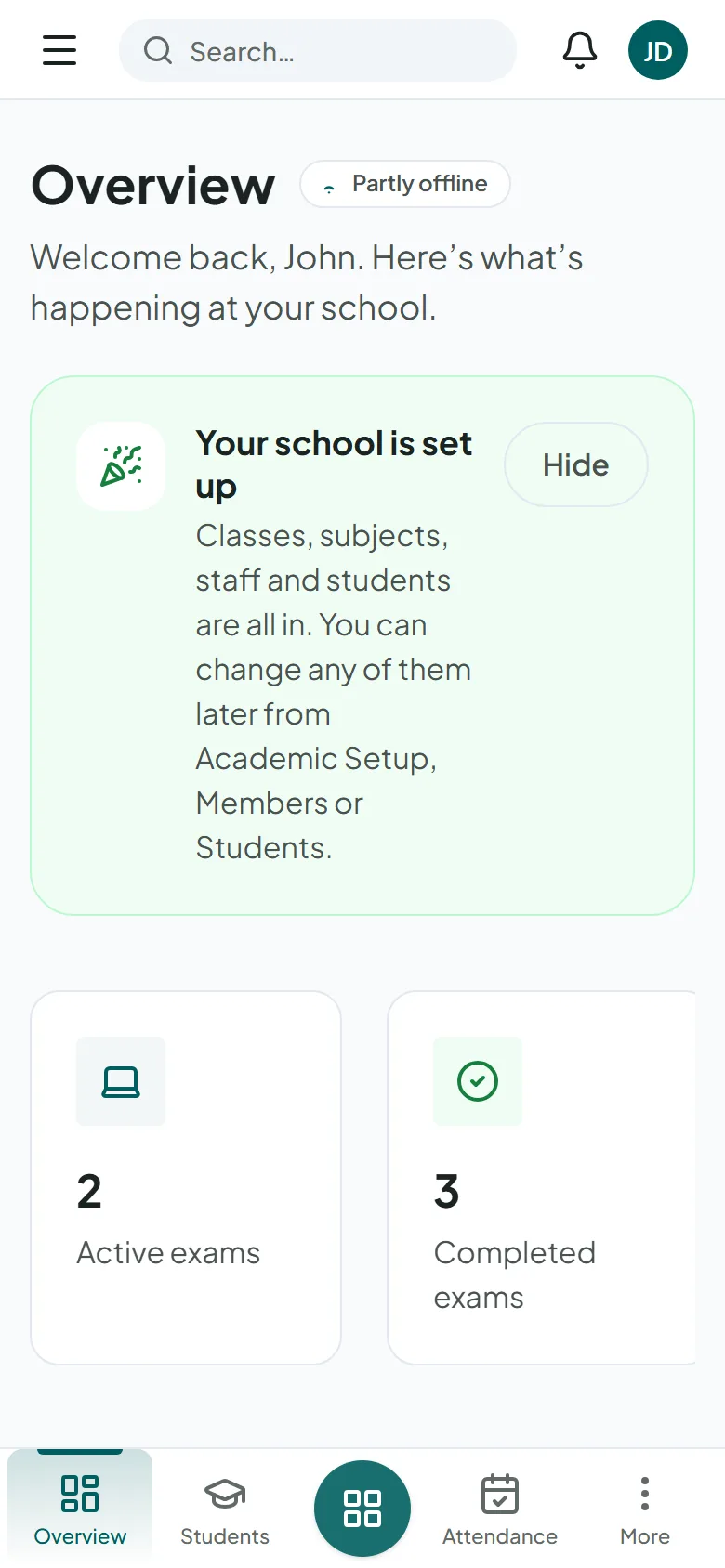
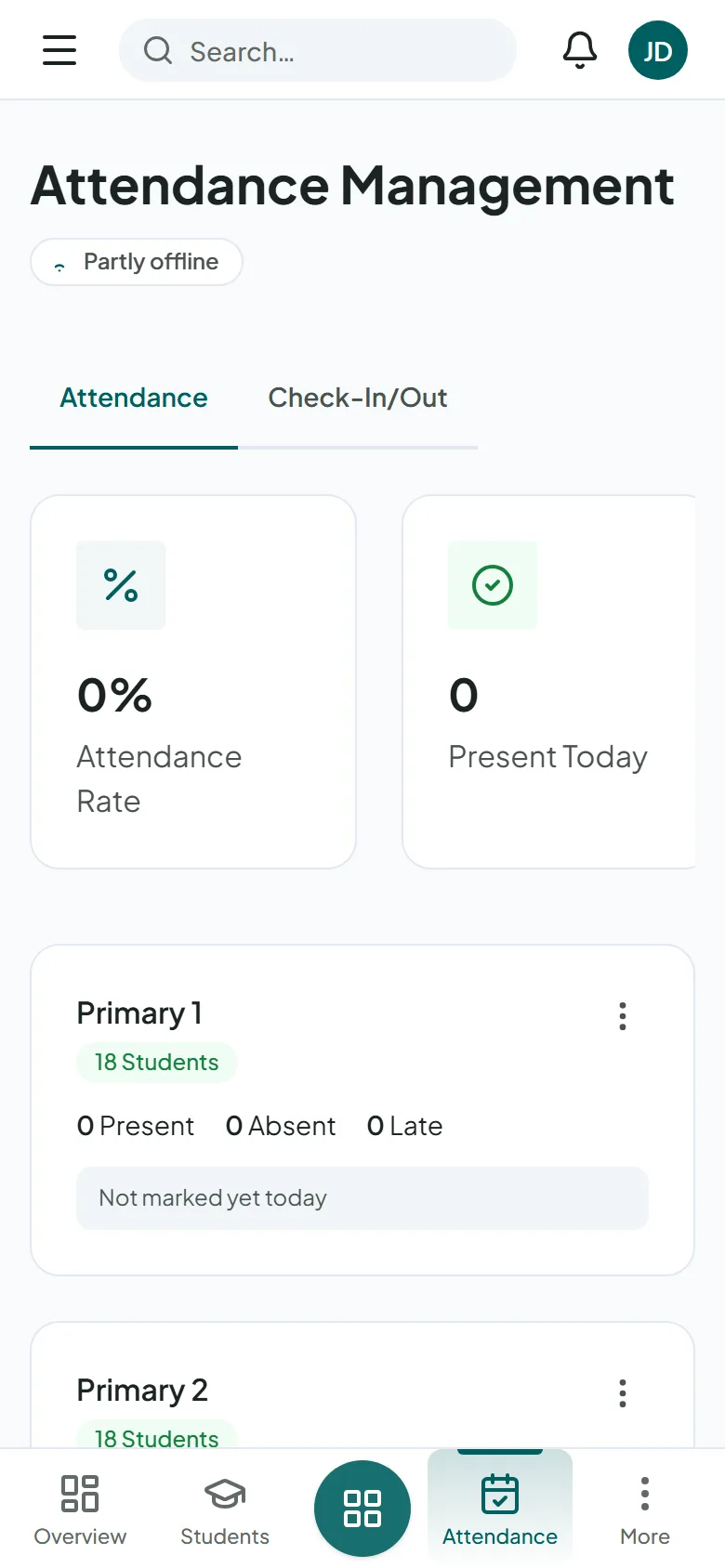
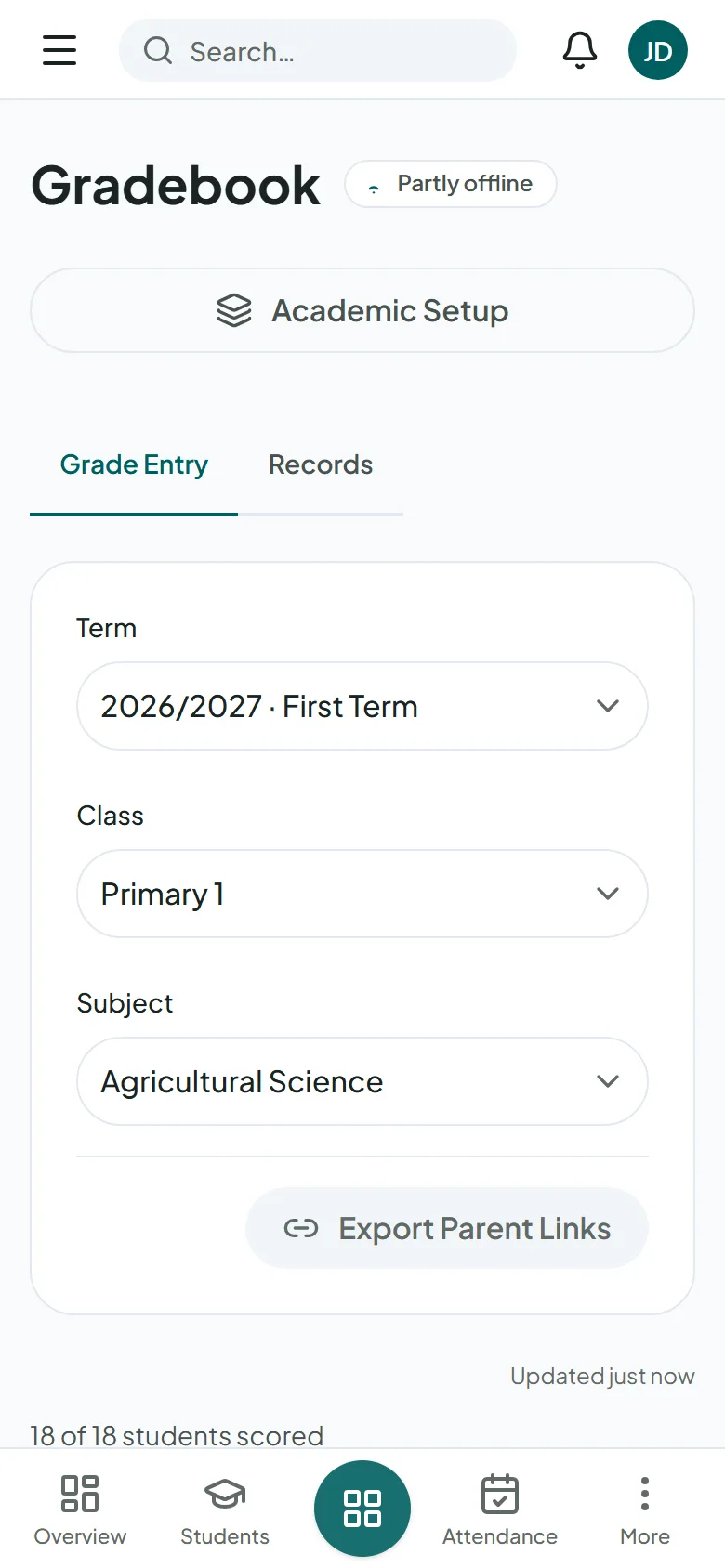
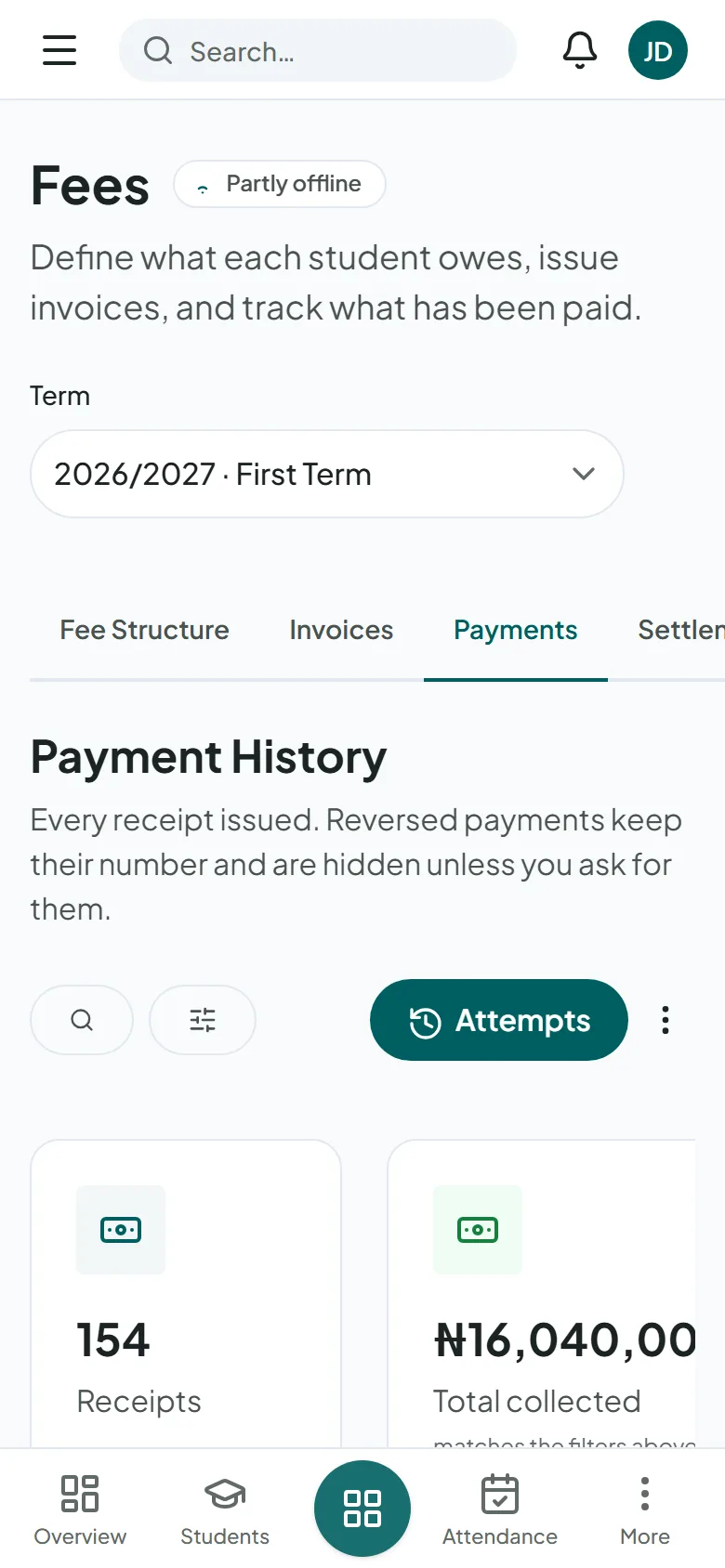
- Instead of a red banner, every screen says how fresh its data is (“Partly offline”, “Updated just now”) and what will happen to your changes. Teachers keep working; sync catches up.
- One module order, everywhere
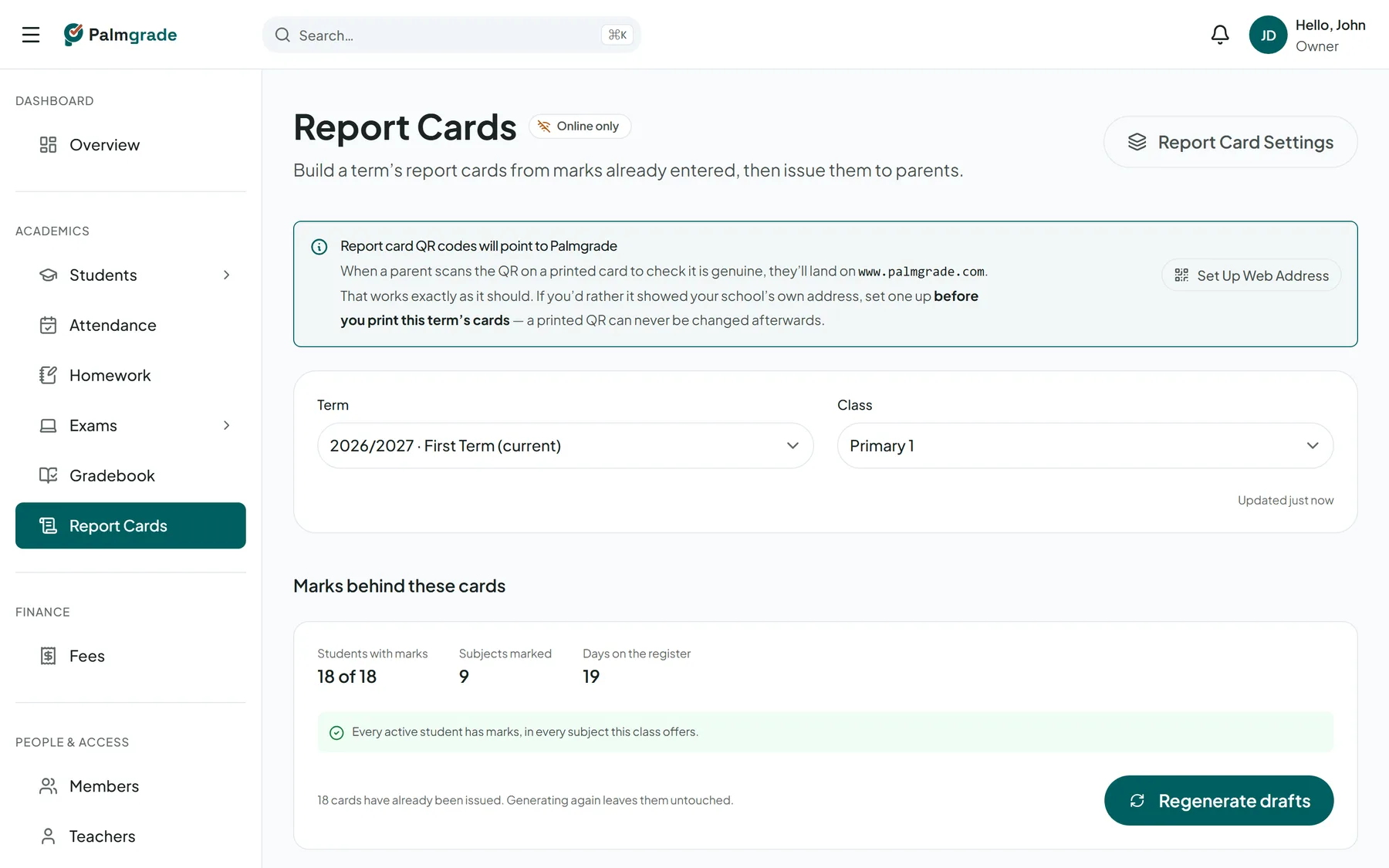
- Student Records → Attendance → Homework → CBT Exams → Gradebook → Report Cards → School Fees → Parent Portal. Dependency first, so the sidebar, the marketing site and the printed flyer all teach the same mental model.
- A gradebook that matches the paper one
- Continuous assessment and exam columns with live totals and grade bands, so the screen looks like the mark sheet teachers already trust.
- Mobile is a shortcut rail
- The phone layout ranks its three bottom-bar slots by how often each task happens, not by the sidebar order. The divergence is deliberate.
Across the product
Same system, every module
On a phone
Built for the device people actually have
Outcome
Live, and running real schools.
Palmgrade launched in beta and is live at palmgrade.com, installable as an app on any device. The design system I set up carries all eight modules, and new features slot into it rather than around it.
Contact
Have a role or a product in mind?
I'm open to full-time and contract product design roles with agencies and product teams. I reply within one working day.
joy@hijoygirl.com ↗